

The site wants your email address. You know what happens next.
You'll get the thing you came for — the PDF, the discount code, the free trial — and then for the next three years you'll get emails you never wanted from a company you visited once. You'll unsubscribe. They'll add you to a different list. You'll unsubscribe again. They'll sell your address to someone else.
Or you could just use 10 Minute Mail.
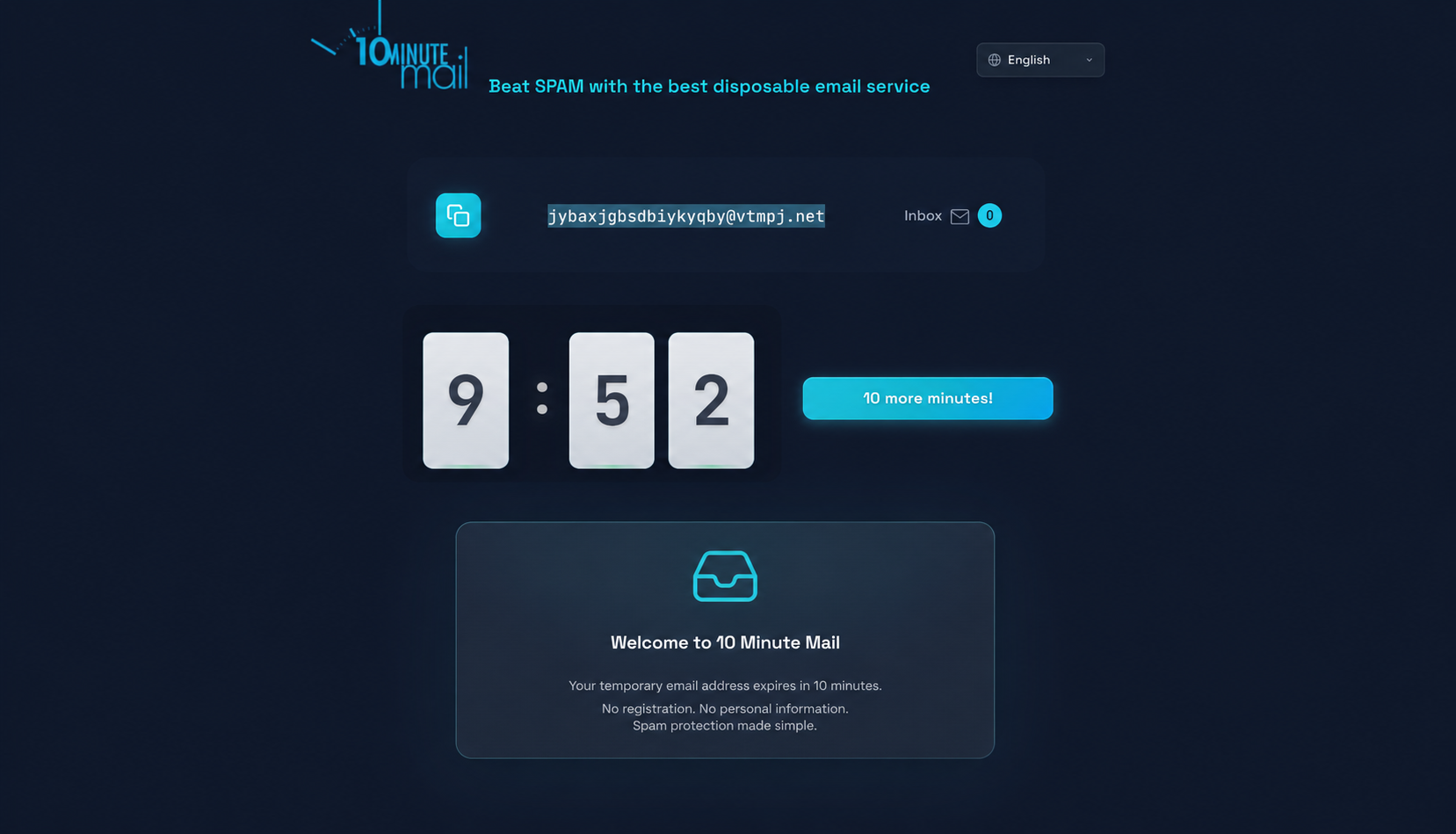
Open the site. Your temporary email address is already there — no setup, no account, no password. It's a real, working email address. Emails sent to it appear on the page in real time. You can receive the confirmation email, click the verification link, get your thing, and walk away.
Ten minutes later, the address is gone. Anything sent to it after that goes nowhere. Your real inbox stays clean. The company has an email that no longer exists. The spam goes nowhere.
You can extend the timer if you need more time — add another 10 minutes with one click, as many times as you need. When you're done, just close the tab. There's nothing to delete, nothing to cancel, nothing to manage.
The use cases are everywhere once you start thinking about them. Free WiFi that requires an email. A news site that wants registration to read one article. A software trial that demands sign-up. A contest entry form. Any website that treats your email address as the price of admission for something that should just be free.
Your real email address is worth protecting.
This one costs nothing and lasts exactly as long as you need it.