

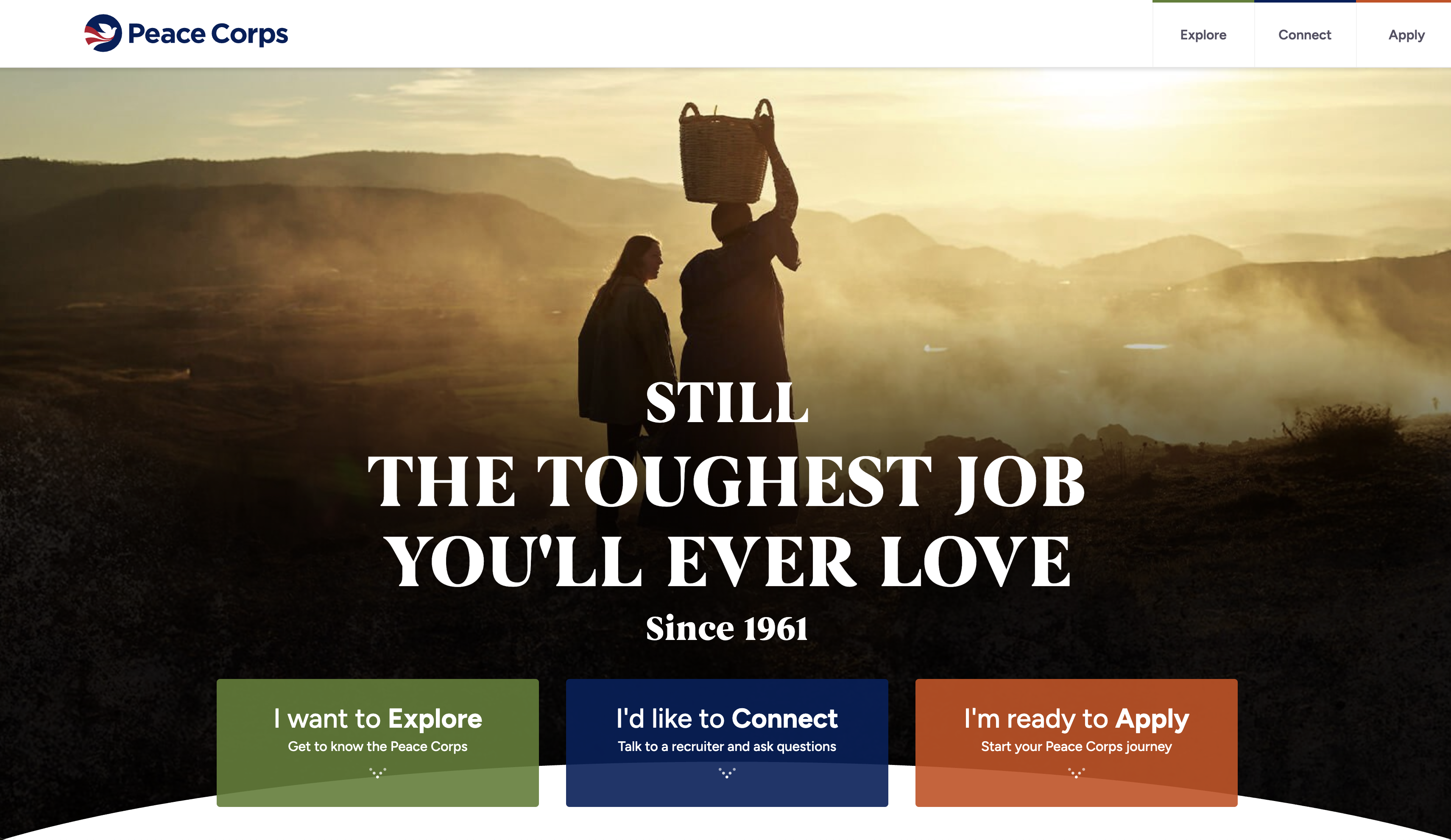
John F. Kennedy launched this in 1961 with a simple idea: send Americans abroad not as soldiers or diplomats, but as neighbors.
Over 240,000 people have gone since then. They've worked in 143 countries. They've taught English in rural Thailand, built water systems in Senegal, supported health clinics in Peru, worked on climate resilience in Vanuatu, taught computer skills in Moldova. They came back speaking languages they didn't know existed and knowing things about the world that no classroom could have taught them.
Here's what the Peace Corps actually covers: round-trip airfare to your country of service. Housing. A monthly living stipend sized to local costs — enough to live like your neighbors, not like a tourist. Full medical and dental coverage for the entire 27 months. Language training. And when you finish: $10,000 in transition funds, eligibility for a noncompetitive federal hiring status, and one year of deferred enrollment at most graduate programs.
The application is competitive but not impossibly so. They're looking for skills — teaching, agriculture, public health, business development, engineering, environmental work — and they're looking for people who can adapt, connect, and stay. The average volunteer is in their late 20s but there's no upper age limit. The oldest volunteer in Peace Corps history was 86.
You live with a host family during training. You learn the language. You get a site assignment. And then for two years, you are not a tourist. You are a neighbor.
Most volunteers say it's the hardest thing they've ever done.
Most volunteers say it's the best thing they've ever done.
The application is open right now.