

TYPE IN YOUR VIN. FIND OUT IF YOUR CAR HAS AN OPEN SAFETY RECALL. THE FIX IS FREE.
A safety recall is supposed to reach you by mail. But if you bought your car used, moved since you registered it, or tossed an envelope that looked like junk, you might never have heard about one. The car in your driveway could have an open recall and a free fix, and nobody would have told you.
The National Highway Traffic Safety Administration runs a tool that does tell you.
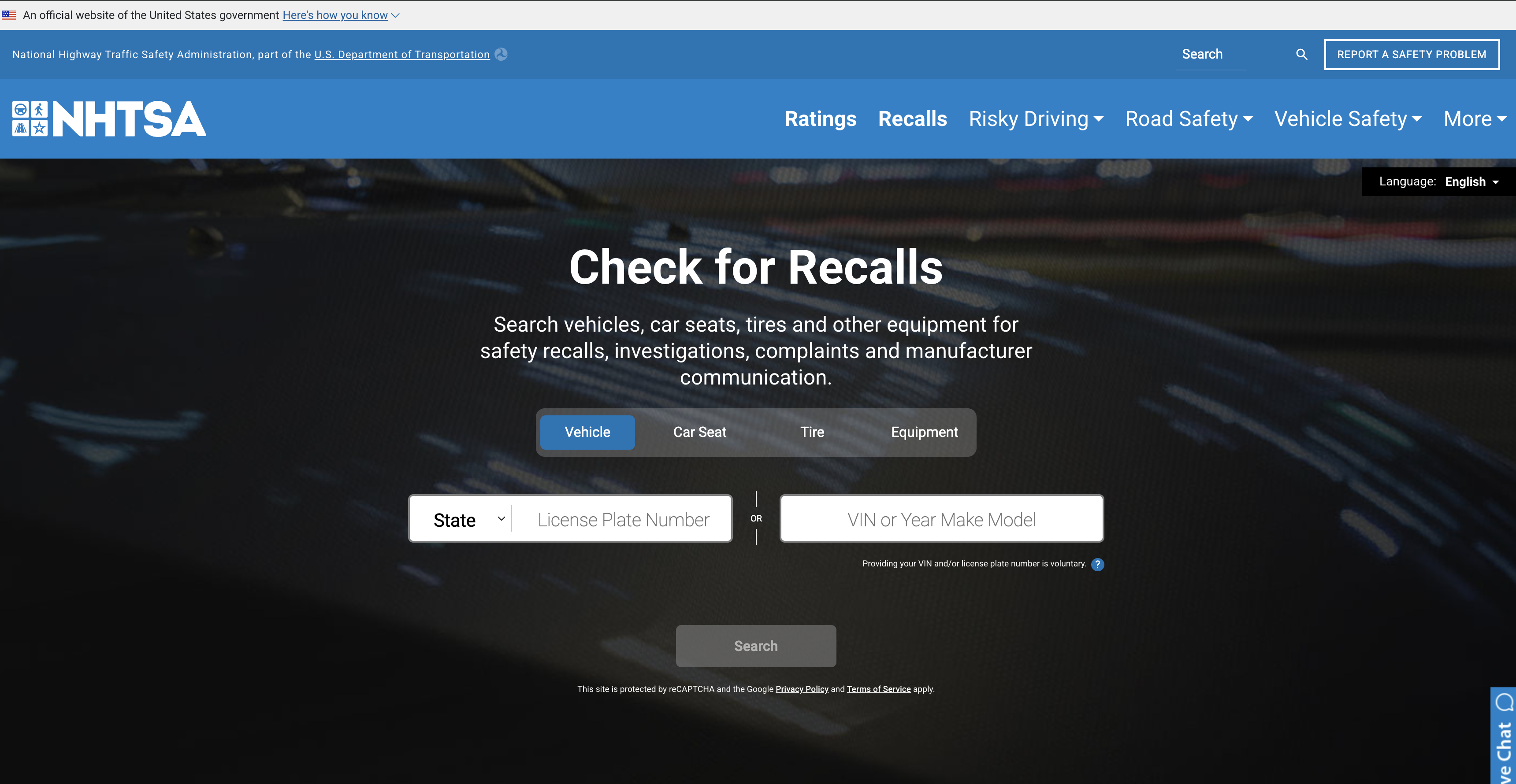
Here's how it works. On the NHTSA recalls page, pick what you want to check: a vehicle, a car seat, a tire, or other equipment. For a car, enter its VIN (vehicle identification number) or its license plate. A VIN is a 17-character code you'll find on the lower left of your windshield, on your registration card, and sometimes on your insurance card. The result tells you whether your specific vehicle has a recall that hasn't been repaired, or it says: "0 unrepaired recalls associated with this VIN."
It does more than one car. You can search up to 100 VINs at once, which is handy if you're comparing used cars or managing a family's or business's vehicles. You can also search by year, make, and model for general recalls, investigations, complaints, and manufacturer communications, or look up a recall by its NHTSA ID.
You can get alerts. NHTSA offers a free SaferCar app for iOS and Android. If a safety recall turns up for a vehicle or piece of equipment you've entered, it sends an alert to your phone. You can also sign up for general recall alerts by email.
What a recall actually means. A recall is issued when a manufacturer or NHTSA decides that a vehicle, car seat, tire, or piece of equipment creates an unreasonable safety risk or fails to meet minimum safety standards. By law, the manufacturer must fix the problem by repairing or replacing the part, offering a refund, or in rare cases buying the vehicle back. For a car, that means a free repair at a dealership. NHTSA also suggests registering your vehicle, tires, car seats, and equipment and checking for recalls twice a year.
And it goes both ways. If you think something on your car is defective, you can report a safety problem to NHTSA. Your complaint goes into a public database with your personal information removed, and when similar reports pile up, they can prompt an investigation, and possibly a recall.
What the VIN and plate search won't show, according to NHTSA:
- A recall that was already repaired. - Some very recent recalls, because VINs are added continuously. - Recalls more than 15 years old, unless the manufacturer offers more coverage. - Recalls by small manufacturers, including some ultra-luxury brands. - Manufacturer service campaigns that aren't safety recalls. - A recall involving an international vehicle.
One more catch: a license plate search uses state DMV records, so if it shows a car you used to own, your state DMV can update it, and meanwhile you can search by VIN.
If you read our piece on CarCareKiosk, that was how to fix the small stuff yourself. This is how to find out about the big stuff you can't see.
Check your car, your kids' car seats, and the used car you're about to buy. It's free, and so is the repair.
READY? HERE IT IS.
 oh, one more thing before you go — word on the street is you missed past Rubbernecks and you're falling behind. The archive.
If you click and buy something, we may earn a small cut. If it's boring, we don't feature it.

GET TOMORROW'S
JAW-DROPPER.
One site. Every day. Free. In your inbox. No garbage. Unsubscribe whenever.
🐔 YOU THINK THIS IS THE ONLY ONE?
THERE ARE HIDDEN GEMS
YOU HAVEN'T SEEN YET.
A new jaw-dropper every day. Go dig through the archive — there's something in there that will wreck you.