

FOLLOW THE MONEY: SEE WHO FUNDED YOUR REPRESENTATIVE'S CAMPAIGN. FREE AND NONPARTISAN.
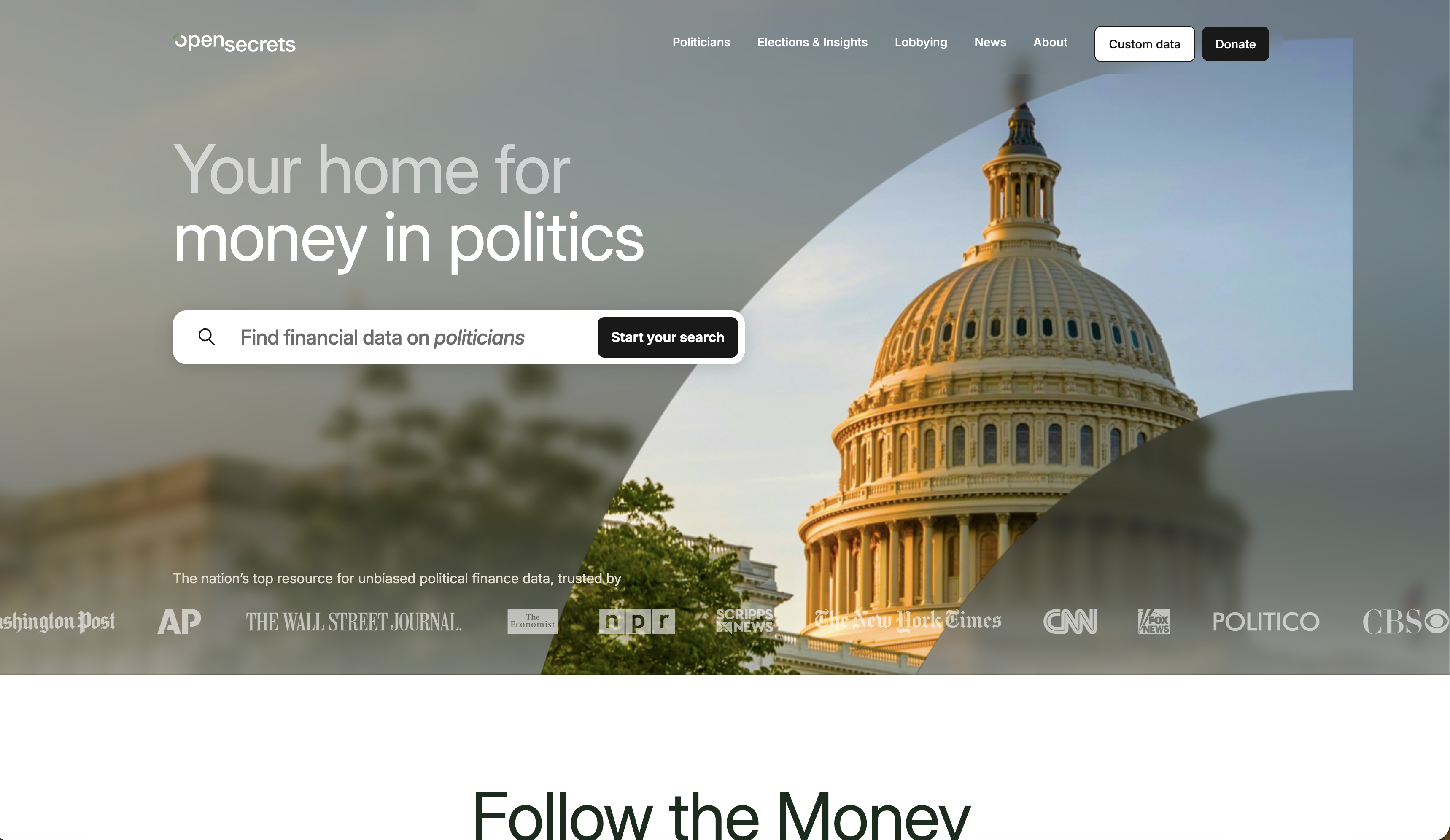
Elections cost a staggering amount of money. Who gave it, and who they gave it to, is a matter of public record. The trouble is that the record lives in thousands of government filings that almost nobody has the time or training to read.
OpenSecrets exists to make that paperwork readable.
It's a nonprofit, and it calls itself nonpartisan. OpenSecrets is a 501(c)(3) organization based in Washington, D.C. It began in 1983 as the Center for Responsive Politics, founded by two retired US senators, Democrat Frank Church of Idaho and Republican Hugh Scott of Pennsylvania. The website went online in 1996. In 2021, the group merged with the National Institute on Money in Politics, which tracked political money at the state level, and took the OpenSecrets name.
Here's what you can look up. You can search by politician, organization, industry, donor, or election cycle, and see:
- Campaign contributions: who gave to a candidate or committee, and how much. - Donors by industry: which sectors fund which campaigns. - Outside spending: money spent by PACs and other groups, separate from the candidates' own campaigns. - Lobbying: which organizations and firms lobby, how much they report spending, and which bills they report lobbying on. - Personal finances of members of Congress, drawn from their disclosures. - The "revolving door": people who have moved between government jobs and lobbying firms, which can point to potential conflicts of interest.
It's built to be used. OpenSecrets says its staff help hundreds of news organizations every year with money-in-politics investigations. A 2025 investigation by New York's Times Union into potentially illegal political donations by nonprofits matched OpenSecrets contribution records against IRS nonprofit records, according to a tool directory that cited the case. And the group says its data is free to download and use for non-commercial purposes, as long as it's credited.
It's a good time to try it. Election Day was just this week, which makes it a natural moment to look up the people who are about to represent you, or the ones you've been hearing about.
A few honest notes before you draw conclusions:
- The data is only as complete as the filings. It depends on what the law requires to be reported, and on when it's reported. - Not every dollar is traceable. Small donations are not itemized, and some political spending flows through groups that don't disclose their donors, so the trail can end. - A donation isn't proof of influence. The tool shows connections and amounts. What they mean is for you to decide.
Look up your own representative. It takes about a minute, and it's all public record.
READY? HERE IT IS.
 oh, one more thing before you go — word on the street is you missed past Rubbernecks and you're falling behind. The archive.
If you click and buy something, we may earn a small cut. If it's boring, we don't feature it.

GET TOMORROW'S
JAW-DROPPER.
One site. Every day. Free. In your inbox. No garbage. Unsubscribe whenever.
MORE LIKE THIS
🐔 YOU THINK THIS IS THE ONLY ONE?
THERE ARE HIDDEN GEMS
YOU HAVEN'T SEEN YET.
A new jaw-dropper every day. Go dig through the archive — there's something in there that will wreck you.