

TRAFFIC LIGHTS FOR SEAFOOD: GREEN MEANS GO, RED MEANS PICK SOMETHING ELSE.
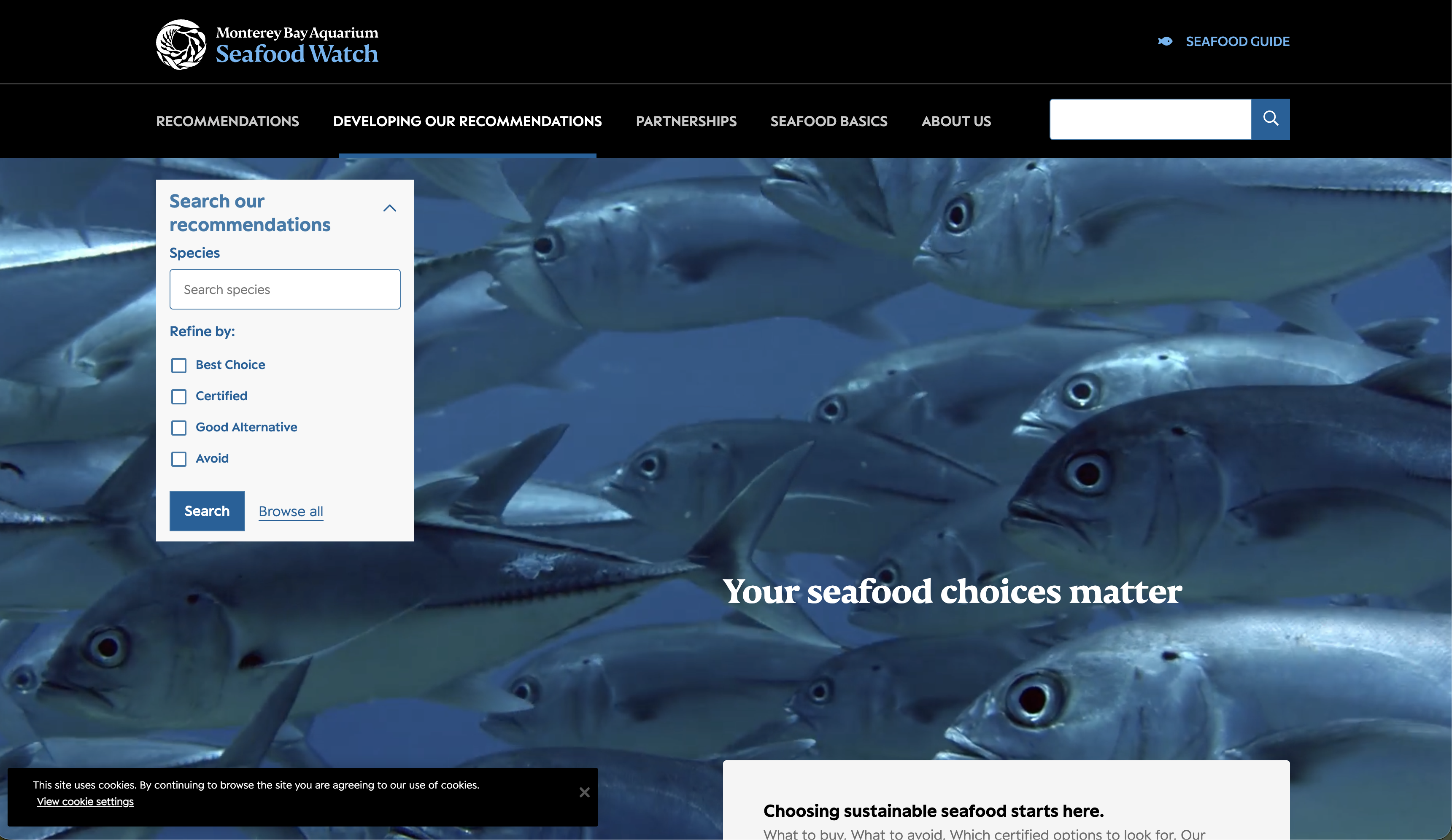
You're staring at a menu, or a counter of fish on ice. Salmon, swordfish, shrimp, cod. One of them might have been fished sustainably. Another might have come from a farm that's damaging a coastline. There's no way to tell by looking, and the person behind the counter may not know either.
Seafood Watch exists for that moment.
It works like a traffic light. The program uses science-based standards to assess the environmental sustainability of fisheries and fish farms around the world, then turns the results into a simple rating:
- Green, Best Choice: caught or farmed responsibly and well managed. - Yellow, Good Alternative: a decent choice, but with concerns about how it's fished, farmed, or managed. - Red, Avoid: it's better to pick something else for now.
There's also a "Super Green" list: Best Choice items that are low in environmental contaminants and good sources of omega-3s, according to the program.
Here's how people use it. The site has regional seafood guides for the US, a sushi guide that lists fish by their Japanese names as well as the common market name, and a free app. The app can use your phone's location to load the right regional guide, lets you search by name, sorts seafood by rating, and suggests alternatives to anything on the "Avoid" list. A "Find this Nearby" button helps you locate restaurants and stores serving Best Choice and Good Alternative items.
It started in a cafeteria. The program grew out of a Monterey Bay Aquarium exhibit called Fishing for Solutions, which ran from 1997 to 1999 and produced a menu of sustainable seafood options for the aquarium's own cafeteria. People loved it, and the public Seafood Watch campaign launched in October 1999.
The reach today is big. According to the Aquarium, as of December 2025, Seafood Watch has recommendations covering 76 percent of the seafood on the US market and 42 percent of global seafood production. Its published ratings cover 300+ species across 55+ countries. It works with 14 major companies that have committed to serving seafood responsibly, and it runs a Best Choice Restaurant Program.
The idea behind it is simple. The program says that when you ask for sustainable seafood, businesses start to source it. Your order is a small vote.
A few honest notes: the recommendations focus on the North American market, so they're most useful for US and Canadian shoppers. Ratings change as fisheries change, so use the current guide, not an old pocket card. The traffic light measures environmental impact, not taste or your personal health needs. And not every item is rated, since the 76 percent coverage means about a quarter of the US market isn't covered.
The next time you're at the fish counter, take ten seconds, open the app, and see what color your dinner is.
READY? HERE IT IS.
 oh, one more thing before you go — word on the street is you missed past Rubbernecks and you're falling behind. The archive.
If you click and buy something, we may earn a small cut. If it's boring, we don't feature it.

GET TOMORROW'S
JAW-DROPPER.
One site. Every day. Free. In your inbox. No garbage. Unsubscribe whenever.
MORE LIKE THIS
🐔 YOU THINK THIS IS THE ONLY ONE?
THERE ARE HIDDEN GEMS
YOU HAVEN'T SEEN YET.
A new jaw-dropper every day. Go dig through the archive — there's something in there that will wreck you.