

'FINANCIAL ADVISOR' IS JUST A JOB TITLE. THIS FREE SITE SHOWS WHAT'S ON THEIR RECORD.
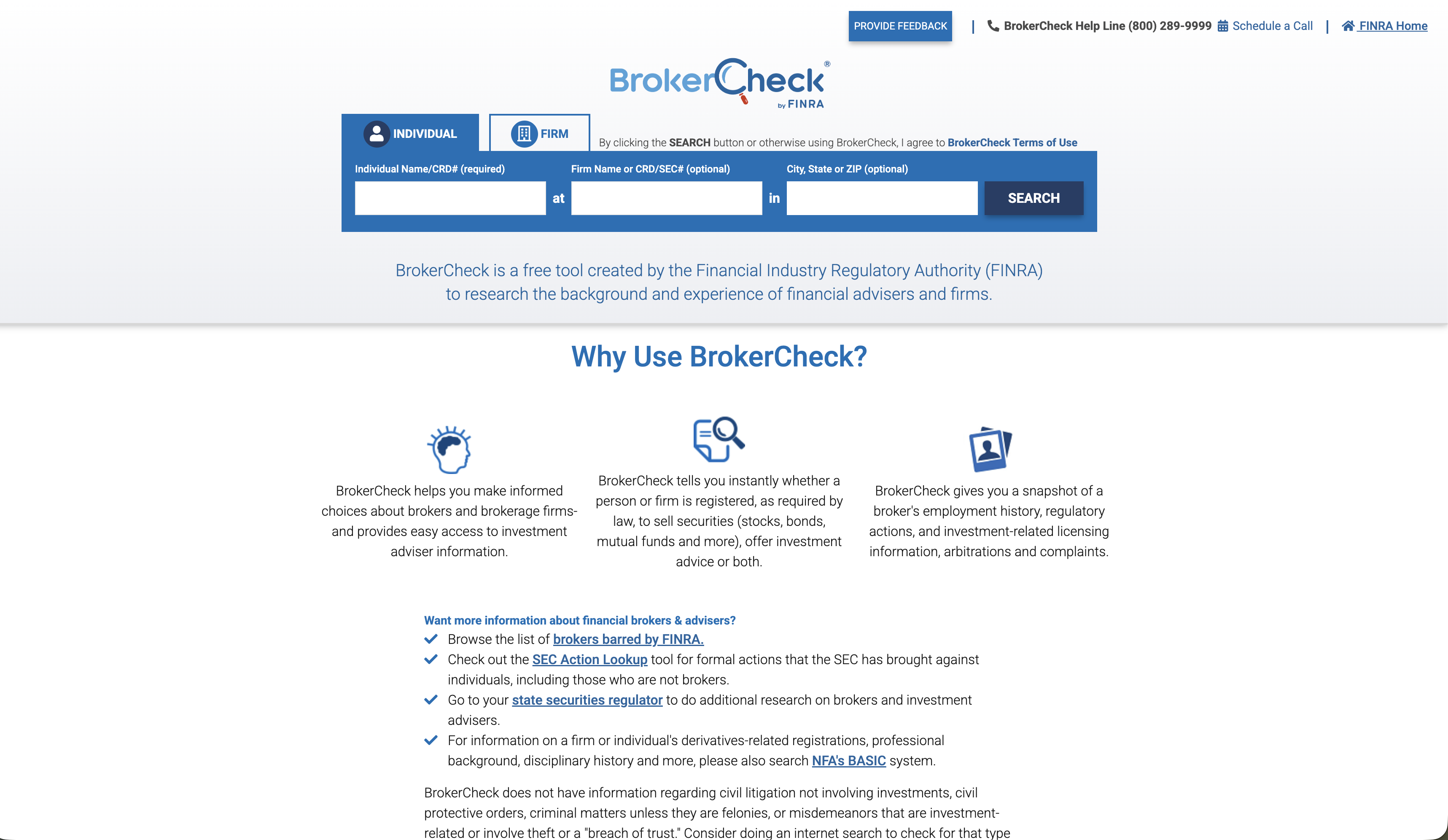
Here's something most people don't realize: "financial advisor" is a job title, not a license. FINRA, the regulator that supervises brokerage firms, lists it among the generic titles that can be used without holding any specific credential. Someone with real qualifications and someone with none can print the same words on a business card.
So how do you tell them apart before you hand over your retirement savings?
You look them up. It takes a few minutes, and it's free.
BrokerCheck is the lookup tool. It's run by FINRA, and anyone can search it by a name or a firm. A report shows the person's registration status, the licenses and exams they hold, and up to 10 years of employment history, including self-employment, military service, and unemployment, so gaps and frequent job changes show up plainly.
Then comes the part that matters: disclosures. These can include customer disputes, regulatory actions, terminations from previous firms, and certain criminal matters and financial events, like bankruptcies. FINRA defines a customer dispute as a consumer-initiated complaint or arbitration alleging things like sales-practice violations, forgery, theft, or misappropriation of funds. If an advisor has one, the listing describes the nature of the dispute, the amount requested, and how it was resolved.
The warning signs, according to the guides, include multiple customer disputes or settlements, regulatory sanctions, a termination after allegations, and frequent firm changes.
There's a second database you should check too. BrokerCheck focuses on brokers and brokerage firms. If the person is an investment adviser, meaning someone paid for their advice and registered with the SEC or a state, the fuller record lives on the SEC's Investment Adviser Public Disclosure site (adviserinfo.sec.gov). The two databases link to each other, and many professionals are registered with both.
What BrokerCheck doesn't show:
- Anyone who was never registered. If a person doesn't appear, that's a question worth asking. - The reason for a termination. FINRA's rules keep that detail out of the public report. - The quality of their advice, or conflicts of interest tied to specific products. - A guarantee. FINRA has a process for expunging some customer-dispute information, so a clean record isn't proof of anything.
This is general information, not financial or legal advice, and it's about the US system.
A good advisor won't mind that you checked. Before you sign anything, take five minutes to look them up.
READY? HERE IT IS.
 oh, one more thing before you go — word on the street is you missed past Rubbernecks and you're falling behind. The archive.
If you click and buy something, we may earn a small cut. If it's boring, we don't feature it.

GET TOMORROW'S
JAW-DROPPER.
One site. Every day. Free. In your inbox. No garbage. Unsubscribe whenever.
MORE LIKE THIS
🐔 YOU THINK THIS IS THE ONLY ONE?
THERE ARE HIDDEN GEMS
YOU HAVEN'T SEEN YET.
A new jaw-dropper every day. Go dig through the archive — there's something in there that will wreck you.